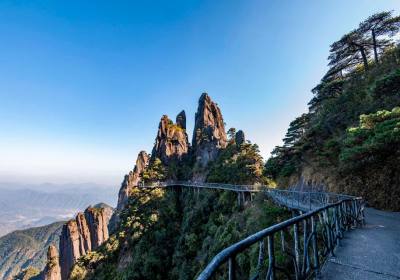
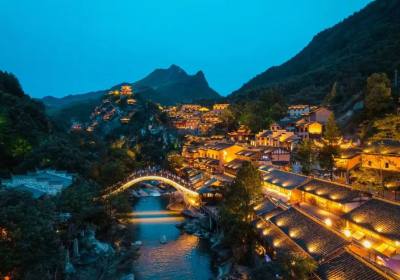
Short answer: Choose Huangshan (Yellow Mountain) if you want China’s most famous mountain scenery and don’t mind big crowds and lots of stone steps. Choose Sanqingshan if you want strange granite pillars, long and fairly level cliffside boardwalks and far fewer people. Both are UNESCO World Heritage Sites, they are about 2 to 3 hours apart, and with five or six days you can see both, with Wuyuan’s villages in between.
| Sanqingshan (三清山) | Huangshan (黄山) | |
|---|---|---|
| Where | Shangrao, north-east Jiangxi | Huangshan City, southern Anhui |
| UNESCO World Heritage | Since 2008 (natural site) | Since 1990 (natural and cultural site) |
| Highest peak | Yujing Peak, about 1,817 m | Lotus Peak, about 1,864 m |
| Known for | Granite pillars shaped like people and animals; boardwalks on sheer cliffs | Granite peaks, twisted pines, sunrise and the “sea of clouds” |
| Walking | Mostly boardwalks once you’re up; some steps | Many long stone staircases, even after the cable car |
| Crowds | Busy on holidays, otherwise moderate | Very busy most of the year |
| Time needed | 1 day, or 2 with a night on the summit | 1 long day, or 2 with a night on the summit |
| Nearest fast train | Yushan South or Shangrao, then 1 to 1.5 hours by road | Huangshan North, then about 1 hour by road |
Both mountains are granite, and both are at their best when cloud drifts through the peaks. The difference is in the shapes.
Huangshan is the classic Chinese mountain of ink paintings: steep peaks, pines growing out of bare rock and wide views over ridge after ridge. Its sunrise and sea of clouds are famous across China, and the mountain has more than a thousand years of poems, inscriptions and paintings behind it, which is why UNESCO lists it for culture as well as nature.
Sanqingshan is more compact and stranger. Its granite has weathered into tall, thin pillars, and some of them have names: the Giant Python is a rock column about 128 m tall, and the Oriental Goddess looks like a woman’s face in profile. Its boardwalks run along the outside of sheer cliffs at about 1,600 m, so you look straight down into the valleys. The mountain is also a Taoist site, with the old Sanqing Palace on the summit plateau.
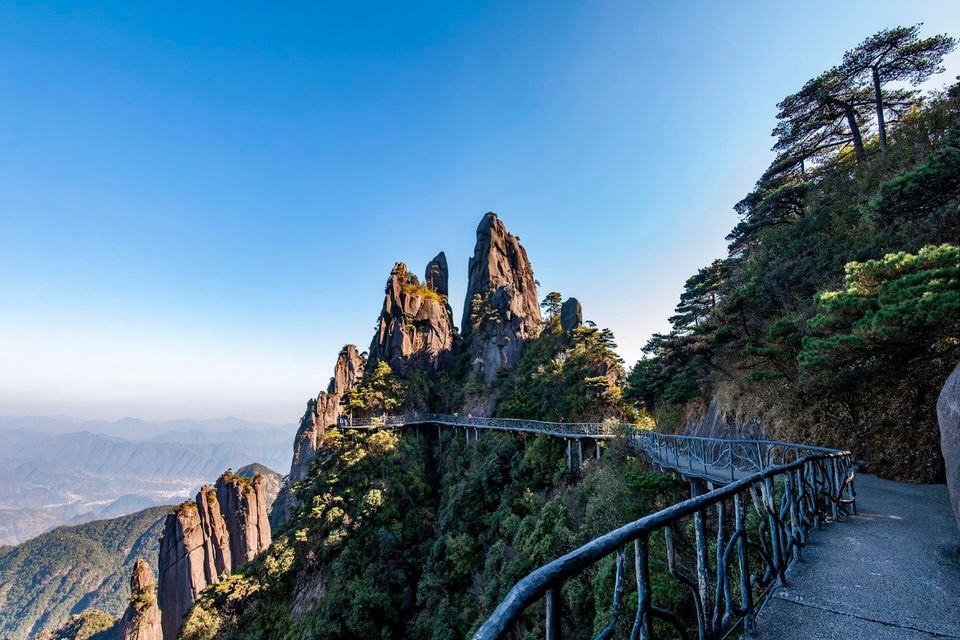
Sanqingshan, for most people. On both mountains you take a cable car most of the way up, but after that they feel very different.
On both mountains you can walk up instead of taking the cable car, but it adds several hours of steep steps each way.
Sanqingshan. Huangshan is one of China’s most visited mountains, and its main viewpoints and cable cars can have long queues even outside holidays. Sanqingshan gets far fewer visitors. It is still busy during Chinese public holidays, especially the October Golden Week (October 1 to 7) and the May Day holiday, and in peak summer weeks entry is by timed, real-name booking. On a weekday in spring or autumn you will often have stretches of boardwalk to yourself.
| If you… | Choose |
|---|---|
| want China’s most famous mountain and its classic views | Huangshan |
| prefer easier walking on boardwalks | Sanqingshan |
| dislike crowds | Sanqingshan |
| are traveling with children or older relatives | Sanqingshan (short loop) |
| want a sunrise and sea of clouds from the summit | Either, with a night on top |
| are also visiting Wangxian Valley | Sanqingshan, about 1 to 1.5 hours away |
| are coming from Shanghai or Hangzhou with only a weekend | Either: both are 1 to 1.5 hours from a fast-train station |
If this is your only trip to China and you have time for one mountain, Huangshan is the name everyone knows. If you have already seen Huangshan, or you want a calmer, more unusual mountain, go to Sanqingshan: many of our travelers say they enjoyed it more.
The two mountains sit on either side of Wuyuan, which has its own high-speed station 30 minutes by train from Huangshan North. A relaxed six-day route:
With a private car and driver, the road sections are easy, and you can switch the order to suit the weather on each mountain.
It is different rather than smaller. Huangshan has the bigger views and the bigger name; Sanqingshan has the more unusual rock shapes, the cliff boardwalks and fewer people. Both are UNESCO World Heritage Sites.
Yes, if you start early and take the cable car. For Sanqingshan, the middle loop fits in a day. For Huangshan, a day is enough for the main viewpoints but feels rushed.
Often, yes. Light cloud moving through the peaks is when both mountains look their best. In thick fog or heavy rain you may see very little, and the cable cars stop in high winds and thunderstorms, so keep a spare day if you can.
Both take about 2.5 to 3.5 hours by high-speed train from Shanghai Hongqiao to the nearest station, plus about 1 to 1.5 hours by road.
For full details on routes, cable cars and tickets, read our Sanqingshan travel guide. Planning a mountain trip? Tell us your dates and we’ll suggest a route.
Source: Fangcheng Travel
 Scan with
 WhatsApp